EM GUIDE at Kiel_ Greenline 2026
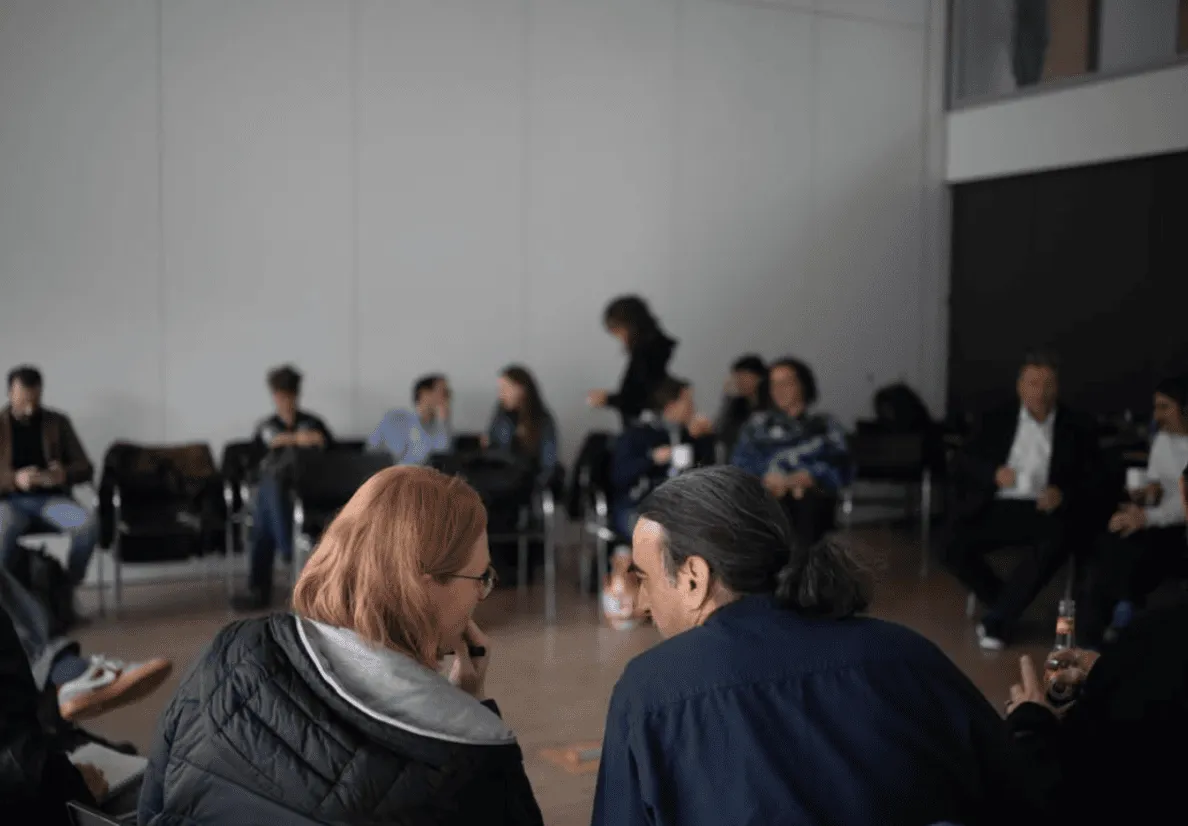
In May, EM GUIDE participated in Kiel_ Greenline 2026: In – Outer – Border, a networking and conference programme organised by Frequenz_ Kiel at the Kiel Science Center.
The event brought together festivals, cultural institutions, independent platforms, artists and music professionals working across contemporary music, sound art and audiovisual culture to discuss sustainability, international cooperation and the future of European cultural networks.
This year’s programme focused on how collaboration and cross-border exchange can create more sustainable cultural ecosystems. Representing EM GUIDE, Gabriella Gal presented our network’s approach to decentralised and collaborative music journalism, focusing on how independent music magazines can build sustainable infrastructure through shared resources, translation, cross-border publishing and long-term editorial cooperation. Her presentation addressed how independent music media is increasingly framed as a promotional tool, while its deeper value lies in documenting, contextualising and amplifying underrepresented actors in music scenes, giving visibility and interpretative depth to artists through text and other forms of cultural documentation.
Speakers explored topics including mobility within European music scenes, sustainable touring and production models, regional cultural policy, and new approaches to international programming and cooperation. Particularly notable contributions included Richard Greer’s presentation on connections between the Scottish and Nordic music scenes through his work as International Relationships Manager at the Scottish Music Centre, Tijs Ham’s discussion of sustainable festival planning through nyMusikk and Only Connect Festival, and Jasper van den Berg’s presentation of iii, an artist-led community platform from The Hague that promotes new interdisciplinary practices combining performance, technology and human senses.
The conference also featured two panel discussions examining the growing geopolitical, economic and environmental pressures shaping the European cultural sector. Discussions addressed international cultural cooperation, independent music infrastructure, climate ethics, touring, music production and the challenges currently affecting artists, venues and organisations working within contemporary music.
Beyond the discussions themselves, Kiel_ Greenline created valuable space for exchange between artists, organisers, institutions and independent initiatives working across Europe’s contemporary music landscape. We are grateful to Frequenz_ Kiel and all participants for the conversations, ideas and new connections, and we look forward to continuing to build collaborative structures that strengthen independent cultural networks across borders.